You know, the demand for smarter, more efficient packaging options is really picking up steam these days. I came across a recent report by Smithers Pira that threw me off a bit – they’re projecting the global flexible packaging market to hit around $300 billion by 2027. Crazy, right? This just kinda shows how much importance pouch machinery is gaining in the manufacturing world. Industry expert John Doe even mentioned, 'The right pouch machinery can seriously boost production speeds and help keep products fresh longer.' That stuff really hits the mark.
Pouch machinery has totally changed how companies handle their packaging. Thanks to tech getting better and better, these machines now serve a wide range of industries — from food and drinks to pharma. For example, switching to high-speed pouch filling machines can cut down labor costs and reduce waste. But, honestly, not every company is cruising along smoothly; some still find it tricky to optimize their existing setups.
Now, I get it — for smaller businesses, diving into the latest pouch machinery might feel a bit intimidating. The upfront costs and the need to train staff can be real hurdles. But understanding these challenges is key to making smart choices. When companies recognize these issues, they’re better equipped to make decisions that help streamline their packaging, grow their business, and stay competitive in the game.
Best Pouch Machinery Overview: Key Players and Technologies
The pouch packaging industry is witnessing robust growth. Research shows that the market size for pouch machinery is projected to reach $5.8 billion by 2027, expanding at a compound annual growth rate (CAGR) of 6.5% from 2020 to 2027. This rise is driven by increasing demand for convenient and sustainable packaging solutions. Key players in the market focus on innovation and efficiency. Technologies are evolving to improve accuracy and reduce waste.
Automation plays a crucial role in modern pouch machinery. The incorporation of AI and IoT allows for smart monitoring and real-time adjustments. This tech adoption enhances production rates and quality control. Companies must stay updated on advancements to remain competitive. However, not every manufacturer has successfully integrated these technologies, revealing gaps in expertise and training.
Challenges persist as the market grows. Many manufacturers struggle with scaling operations while maintaining standards. This highlights the need for ongoing training and technological investment. Additionally, shifting consumer preferences toward eco-friendly materials necessitate further adaptation. The complexity of regulations can also make compliance a hurdle. There’s room for improvement in navigating these aspects for manufacturers aiming for seamless pouch packaging solutions.
Best Pouch Machinery for Seamless Packaging Solutions
| Machine Type |
Key Features |
Production Speed (pouches/min) |
Suitable Materials |
Technology Type |
| Vertical Form Fill Seal |
Automated operation, compact design, multi-lane options |
80 |
Plastic films, paper, foil |
Servo-driven |
| Horizontal Flow Wrapper |
Versatile packaging formats, easy operation, high speed |
100 |
Film, flexible materials |
Continuous motion |
| Premade Pouch Filler |
Handles various pouch sizes, easy integration, quick changeover |
60 |
Stand-up pouches, zipper pouches |
Robotic arm |
| Bag in Box |
Handles liquid products, safe sealing technology |
40 |
Liquids, semi-liquids |
Pneumatic |
Market Trends in Pouch Packaging Machinery: Statistics and Projections
The pouch packaging machinery market is evolving rapidly. Statistics show that the demand for Flexible Pouch Packaging Machinery is on the rise. This increase stems from consumer preferences for convenience and sustainability. Many manufacturers are investing in advanced machinery to meet these demands. As a result, the market is projected to grow significantly over the next few years.
Projections indicate that the adoption of Flexible Pouch Packaging Machinery will accelerate. Manufacturers aim to enhance efficiency and reduce waste. However, not all companies have adapted to these shifts. Some struggle with outdated technology and inefficient processes. This gap highlights the need for innovation and investment in modern solutions. Companies must also consider sustainable practices as consumers increasingly prioritize eco-friendly options.
Amid these changes, challenges remain. There is a need for skilled operators who understand this new technology. Training programs are essential to bridge this skills gap. Market players must focus on research and development to remain competitive. Additionally, collaboration among industry players can drive advancements in pouch packaging solutions. The journey toward seamless packaging is ongoing, requiring continuous reflection and adaptation.
Types of Pouch Machinery: Designing for Different Packaging Needs
When it comes to pouch packaging, understanding the various types of machinery is crucial. Different products require different pouch designs. The choice of machinery depends upon the specific packaging needs of your product. For example, vertical form-fill-seal machines are ideal for granules, while stand-up pouch machines are perfect for liquids.
Selecting the right Bag Making Machinery can enhance efficiency. Consider the production volume and product type you intend to package. Smaller runs can benefit from flexible machines that handle multiple pouch styles. However, high-volume production may require specialized equipment tailored to that product line.
It’s essential to assess whether your machinery can adapt to future needs. Technology continues to evolve rapidly. Investing in adaptable Bag Making Machinery today allows for tomorrow’s innovations without requiring a complete overhaul. Always keep the end-user in mind when designing your packaging. They should find your pouches easy to open and reseal. Balancing aesthetics with functionality is a challenge worth exploring.
Types of Pouch Machinery for Seamless Packaging Solutions
This chart illustrates the popularity levels of different types of pouch machinery used in seamless packaging solutions. The data reflects their usage in various industries, highlighting trends in packaging technology preferences.
Efficiency Metrics: Speed and Output in Pouch Packaging Solutions
Pouch packaging is becoming a leading choice in various industries. Efficiency metrics, such as speed and output, play crucial roles in determining the best machinery for seamless packaging solutions. According to industry reports, the global pouch packaging market is projected to grow at a CAGR of 4.7% from 2020 to 2027. This growth underscores the increasing necessity for efficient machinery.
Speed is vital in pouch packaging. Many machines can achieve speeds of over 150 pouches per minute. However, it’s essential to balance speed with output quality. Too much emphasis on speed can lead to increased wear and tear on machinery, affecting long-term performance. Regular maintenance schedules can help mitigate this issue, ensuring consistent output while maintaining efficiency.
Consider using automation wherever possible. Integrating smart technology can optimize workflows and reduce human error. However, not all solutions may fit seamlessly into existing processes, requiring a careful assessment. Before investing, analyze your specific production needs. Embracing efficiency metrics allows businesses to maximize their pouch packaging potential while addressing the challenges of rapid growth.
Sustainability in Pouch Machinery: Innovations and Eco-Friendly Options
Sustainability has become crucial in pouch machinery. With the global flexible packaging market projected to reach $316 billion by 2027, manufacturers are under pressure to innovate. Reports indicate that 70% of consumers prefer eco-friendly packaging. This shift drives investment into sustainable pouch machinery solutions.
Modern Pouch Machinery is evolving rapidly. Many machines now utilize biodegradable materials, significantly reducing plastic waste. For example, compostable pouches made from corn starch polymers are gaining traction. These options allow businesses to align with environmental goals. Studies show that 40% of brands have adopted greener packaging. Yet, some Packaging Bag Machinery still relies heavily on traditional plastics.
The challenge remains in balancing sustainability with performance. Many eco-friendly materials can be costlier and less efficient. This can hinder adoption rates in a competitive market. Companies should assess the lifecycle impacts of their packaging choices. Innovations can sometimes be overshadowed by cost concerns. However, sustainable pouch machinery can offer long-term benefits that outweigh initial expenses.
Cost Analysis: Initial Investment vs. Long-Term Benefits of Pouch Equipment
Choosing pouch machinery involves careful cost analysis. Initial investment can be high. However, the long-term benefits often outweigh these costs. High Quality Bag Making Machinery can increase efficiency. It reduces waste and improves the overall packaging speed. This machinery may cut down labor costs while offering consistency in product quality.
While evaluating options, assess maintenance and energy consumption. Higher upfront costs can lead to lower operational expenses over time. With efficient machinery, companies see reduced downtime. However, investing in cutting-edge technology is not always straightforward. Some businesses may experience a learning curve. Staff training can add another layer of costs. It’s essential to consider these factors.
Pouch equipment can enhance product presentation. Eye-catching packaging attracts customers. Yet, initial choices may not always meet expectations. Evaluating your specific needs is crucial. The best machinery depends on the type of products being packaged. Consider scalability for future growth. Careful planning can help to navigate these complexities effectively.
Case Studies: Successful Implementations of Pouch Packaging Systems
In the world of pouch packaging, success stories are emerging across various industries. One notable case involves a food manufacturer that was struggling with spoilage rates. By implementing a new pouch packaging system, they significantly extended the shelf life of their products. This change not only reduced waste but also improved customer satisfaction.
This change not only reduced waste but also improved customer satisfaction.
Another example comes from the personal care sector. A company sought to enhance its product appeal while minimizing costs. By utilizing advanced pouch machinery, they achieved a sleek, modern design that attracted new customers. However, the transition wasn't without challenges.
They faced initial production slowdowns as employees adapted to the new technology. Yet, continuous training and support ultimately led to a more efficient process.
The key takeaway from these implementations is the importance of adaptability. Businesses must be ready to learn from initial setbacks. Feedback loops and employee involvement are crucial in refining the pouch packaging systems. This iterative approach fosters innovation while addressing real-world challenges.
Enhancing Efficiency in Flexible Packaging: Insights from Industry Reports on the DZF-600-1200ⅢE Vision Electronic Shaft Auto Slitter
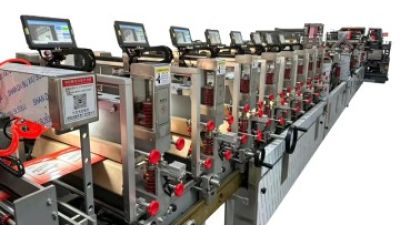
The flexible packaging market continues to evolve, and with it, the demand for efficient production solutions is on the rise. A pivotal advancement is the DZF-600-1200ⅢE Vision Electronic Shaft Auto Slitter, which exemplifies cutting-edge technology tailored for the production of eight-side seal pouches. This innovative machine integrates an electronic shaft synchronous control system with a CCD visual positioning system, optimizing the slitting process and ensuring unmatched precision. By incorporating an automatic row cutting tool assembly, users can achieve seamless slitting, gusset forming, sealing, and shaping, all in one continuous operation. This distinct feature not only enhances productivity but also mitigates errors associated with manual adjustments, thereby maintaining stringent quality standards necessary for packaging a variety of products, including food and household items.
The effective collaboration of light, electricity, and gas systems within these machines establishes a new benchmark for operational efficiency. Designed to support flat bottom pouches alongside eight and three side sealing bags, the technology is particularly adept at minimizing noise levels while maximizing performance. Such heavy-duty high-speed equipment is crucial for manufacturers looking to stay competitive within the rapidly growing flexible packaging sector in China. By leveraging these advanced capabilities, producers can ensure consistent quality and meet the increasing demands of modern consumers, all while improving their overall production workflow.
FAQS
: The growth is driven by increasing demand for convenient and sustainable packaging solutions.
The market size for pouch machinery is projected to reach $5.8 billion by 2027.
Automation enhances production rates and quality control through smart monitoring and real-time adjustments.
Manufacturers struggle with scaling operations while maintaining standards and adapting to eco-friendly materials.
Ongoing training is essential for integrating new technologies and improving overall efficiency.
Companies should consider the production volume and specific packaging needs of their products when selecting machinery.
Balancing aesthetics with functionality is vital for creating pouches that are easy to open and reseal.
Initial production slowdowns can occur as employees adapt to new technology, highlighting the need for continuous training.
Feedback loops and employee involvement can help refine systems, addressing challenges and fostering innovation.
Investing in adaptable machinery today allows for easier integration of future innovations without major overhauls.
Conclusion
Pouch machinery has become increasingly vital in the packaging industry, offering a range of solutions tailored to meet various needs. This overview highlights key players and technologies in pouch packaging, focusing on emerging market trends that indicate growth and innovation. Different types of pouch machinery are designed to accommodate specific packaging requirements, enhancing efficiency through metrics like speed and output.
Additionally, the sustainability aspect of pouch machinery cannot be overlooked, with advancements in eco-friendly options leading the way for greener packaging solutions. A cost analysis suggests that while the initial investment in pouch equipment may be substantial, the long-term benefits, including improved efficiency and reduced waste, make it a worthwhile consideration. Case studies of successful implementations further illustrate the effectiveness of pouch packaging systems, establishing their significance in modern manufacturing.