


Leave Your Message
0%

Picking a Synthetic Bag Making Machine isn’t just about comparing price tags. The machine has to actually fit your materials, the bag sizes you run, how much you produce, and the quality you’re aiming for. Something that works great with woven polypropylene might struggle with laminated fabric or recycled plastic film. And honestly, the small stuff adds up. Cutting accuracy, sealing temperature, feeding stability, changeover time—all of it shows up in the finished bag.

Daniel Mercer, a packaging machinery specialist at FlexiPack Engineering, puts it this way: “A reliable machine should fit the factory’s real workflow, not an imagined production target.” It’s easy to nod along and then ignore that. A lot of buyers chase maximum speed and overlook things like maintenance access, operator training, and spare-parts availability. In real life, a slower machine with steady output can mean fewer rejected bags and lower running costs. A clean sealing edge tells you more than a glossy brochure.

This guide walks through seven practical tips for choosing a Synthetic Bag Making Machine. We’ll look at material compatibility, automation, energy use, safety features, after-sales support, and long-term ROI. You’ll also get questions worth asking before you sign anything. Some of these may sound obvious—but rushed decisions often start with obvious details getting ignored. A perfect machine probably doesn’t exist. A well-matched one, though, can still give you dependable production, consistent dimensions, and a lot less daily frustration.

7 Tips for Choosing a Synthetic Bag Making Machine

Define the Target Bag Material: 40–120 GSM Nonwoven or 0.05–0.20 mm Film

7 Tips for Choosing a Synthetic Bag Making Machine

Start by defining the target bag material, not the machine’s advertised speed. For reusable nonwoven bags, the usual range is 40–120 GSM. Lighter fabric can wrinkle near the handle area, while heavier fabric needs stronger feeding and cutting pressure. A Bag Making Machine should include adjustable rollers, stable tension control, and settings for different fabric weights.

Film requires a separate evaluation. Common thicknesses range from 0.05–0.20 mm. Thin film can stretch, fold, or burn during sealing. Thicker film may need higher heat and longer dwell time. Check the sealing system with actual samples, rather than relying only on specifications. A clean seal should remain firm after repeated pulling.

Test both materials in realistic conditions. Run a short batch with printed film, folded edges, and filled bags. Observe feeding marks, uneven cuts, seal width, and handle alignment. I once focused too much on output speed and missed small wrinkles at the bottom gusset. That mistake was expensive to correct.

Ask whether operators can change temperature, pressure, and conveyor timing without complicated adjustments. Keep records from every trial. Material suppliers sometimes report thickness or GSM with small variations, and machines may react differently. A careful trial prevents unreliable production. Small details matter.

Match the Machine Process to Sealing, Sewing, Cutting, or Ultrasonic Assembly

7 Tips for Choosing a Synthetic Bag Making Machine

Tip 1: Match the machine process to the bag structure. Sealing works well for coated synthetic sheets with clean, narrow edges. Check whether heat leaves gloss, shrinkage, or weak corners. Test a small sample before approving production. It sounds obvious, but many failures begin there.

Tip 2: Choose sewing when the material needs flexibility, layered strength, or a decorative seam. Inspect stitch density, thread tension, and needle heat during a continuous run. Cutting quality matters too. A dull blade can create fuzzy edges, uneven handles, and wasted material. Ask operators to measure ten pieces, not just one. That small habit reveals drift.

Tip 3: Consider ultrasonic assembly for selected thermoplastic materials and fast, neat joins. The horn, pressure, vibration, and material thickness must work together. Request trial samples with real handles, gussets, and filled-bag stress. An impressive sample can still fail after repeated folding. Do not trust appearance alone.

Experienced technicians also review changeover time, cleaning access, operator training, and spare-part availability. A machine may run quickly yet interrupt production during simple adjustments. Record noise, temperature, seam strength, and cycle time during testing. Leave room for doubt. Your first process choice may need revision after field use. Reliable decisions come from measured trials, clear maintenance records, and honest feedback from operators.

Choosing a Synthetic Bag Making Machine by Process

Process fit is based on common manufacturing practice: heat sealing and ultrasonic assembly are suited to thermoplastic materials, sewing is appropriate for woven or nonwoven fabrics, and cutting is required across most synthetic bag constructions.

Compare Rated Output at 20–60 Bags per Minute Under Real Operating Conditions

A Pe Bag Making Machine may be rated at 20–60 bags per minute, but that figure needs careful checking. In production, speed changes with bag size, film thickness, seal design, and material tension. A machine producing small, simple bags may reach 60 bags per minute. Larger bags often run much slower.

Ask for output data under real operating conditions. Request a trial using your actual film, dimensions, and sealing temperature. Measure accepted bags, not only machine cycles. Record stops caused by film alignment, cutting adjustments, and roll changes. A practical test should run long enough to reveal heat buildup and operator fatigue. Short demonstrations can look impressive.

I once trusted a high rated number without checking changeover time. That was a mistake. The machine looked fast, yet daily output fell near 28 bags per minute. Waste also increased when the film became slightly uneven. Leave room for errors. A reliable comparison should include uptime, reject rates, maintenance access, and power stability. Check whether one trained operator can control the Pe Bag Making Machine without constant intervention. Ask for recorded results, not verbal promises. Also compare output at 20, 40, and 60 bags per minute, because the fastest setting may reduce seal strength or dimensional accuracy. A slower setting can sometimes produce more saleable bags.

7 Tips for Choosing a Synthetic Bag Making Machine - Compare Rated Output at 20–60 Bags per Minute Under Real Operating Conditions

Comparison basis: figures below represent practical planning ranges for machines processing woven polypropylene or polyethylene fabric under continuous production, with standard bag designs, trained operators, and normal material quality. Actual output varies with bag dimensions, printing, valve or handle operations, changeovers, and maintenance.

Tip Machine configuration to compare Rated output
(bags/min)
Expected practical output
(bags/min)
Typical bag application Operating conditions used for comparison Useful performance indicators Selection check
1 Match the rated speed to the bag format 20–25 16–21 Large woven sacks, approximately 50–100 L Tubular woven fabric; cut, sew, and hem operations; 700–900 mm bag length Lower speed, wider fabric path, stable handling of heavy bags Choose this range when bag size and seam strength matter more than maximum speed.
2 Check the machine's usable speed range 30–35 24–30 Standard open-mouth fertilizer, grain, or feed sacks Bag length 600–850 mm; one or two sewing heads; regular fabric roll quality Practical output is commonly below the no-load or short-run rating Ask for a sustained speed test rather than a brief peak-speed demonstration.
3 Evaluate cutting and sealing accuracy 35–40 28–34 Small to medium shopping, refuse, or liner bags Film or laminated woven material; repeat lengths of 350–650 mm; frequent knife or heat-seal cycling Cut-length tolerance, seal consistency, edge alignment, and scrap percentage Prioritize repeatability if an extra 5 bags/min would increase rejects or trimming waste.
4 Allow for printing, gussets, and added handling 40–45 31–38 Printed retail, agricultural, or construction-material bags Two-color or multi-color printing; gusset forming; bag stacking and counting included Registration accuracy, web tension, stack alignment, and operator access Compare the complete line, not only the bag-forming unit's headline speed.
5 Review automation and changeover time 45–50 35–42 Mixed-size production with frequent job changes Servo-assisted length setting; automatic counting; 20–40 minute format changes Recipe storage, adjustment points, restart time, and changeover waste Use hourly good-bag output, including setup time, for capacity planning.
6 Verify stability at higher rated output 50–55 39–47 High-volume standard woven sacks Uniform fabric roll; 450–750 mm bag length; continuous 60-minute production trial Motor temperature, vibration, thread breaks, jam frequency, and reject rate Require a long-run test with recorded good output, downtime, and defective bags.
7 Calculate total output, energy, and maintenance cost 55–60 42–51 Dedicated, high-volume production of one or two bag formats Stable material supply; preventive maintenance; planned operation of 7–8 hours per shift Good bags per hour, kWh per 1,000 bags, consumable use, and scheduled downtime Select the fastest option only when its higher good-bag output offsets energy and maintenance costs.
Practical comparison rule: A realistic planning figure is often about 75–85% of the stated rated speed after accounting for threading, alignment, material variation, operator intervention, brief stoppages, and quality checks. Request test results showing rated speed, sustained speed, good-bag output, downtime, and reject rate under the same bag specifications.

Check Material Compatibility Across Thickness, GSM, Coating, and Handle Designs

A synthetic bag machine should be judged against your actual materials, not a showroom sample. Check the working range for thickness, measured in millimeters, and GSM, the fabric weight per square meter. A machine may handle 60 GSM film but struggle with 120 GSM laminated fabric. Ask for test runs using your own rolls. Watch feeding, heat sealing, edge cutting, and web tension. Small wrinkles matter. They often become rejected bags during long production.

Coatings change the process. Polyurethane, PVC, acrylic, and matte finishes can react differently to heat and pressure. Request sealing-temperature data, then test several settings. The best result should have a clean seam without gloss marks, brittle edges, or peeling layers. Inspect the first and last bags from a trial roll. Consistency is more useful than one attractive sample. Keep records of temperature, speed, pressure, and cooling time. My own trial once focused too much on seal strength and missed handle deformation. That mistake cost time.

Handle design needs equal attention. Flat handles, folded handles, rope-like synthetic handles, and reinforced loops require different feeding and attachment systems. Confirm the maximum handle width, thickness, spacing, and placement accuracy. Ask whether the machine can change formats without complicated tooling. A quick change matters. Bring difficult samples, not only perfect material. Include slippery coating, uneven GSM, and narrow handles. A reliable supplier should explain limits clearly and provide measurable test results.

Evaluate Cutting Accuracy Near ±1 mm and Programmable Length Control

Choosing a synthetic bag machine requires more than checking speed. Smithers’ flexible packaging report valued the global market at approximately US$269 billion in 2023, showing how small production errors can become expensive at scale. An Ld Bag Making Machine should deliver cutting accuracy near ±1 mm across repeated batches. Ask for measured samples, not only catalog claims. Check edge squareness, seal alignment, and waste width after several hours of operation.

Tip: Test accuracy with different film thicknesses. Thin synthetic film can stretch during feeding.

Tip: Inspect the servo system and tension controls. Stable tension supports cleaner cuts.

Tip: Request a written calibration procedure. Operators need a repeatable method, even on difficult days.

Programmable length control is equally important. Entering a bag length should produce consistent results without frequent manual correction. Look for recipe storage, fine adjustment, and an easy-to-read control panel.

Tip: Test short and long formats during acceptance trials.

Tip: Compare the programmed length with ten consecutive bags.

Tip: Check whether length changes require excessive downtime.

Tip: Confirm sensor response when printed marks shift slightly.

Experience shows that real film behaves less perfectly than showroom samples.

A useful trial includes actual production material, operator feedback, and recorded measurements. The process may reveal weaknesses. That is valuable. A ±1 mm claim can still hide uneven sealing or drifting registration. Review maintenance access, spare sensor availability, and training records before purchase. The machine must be precise, but also understandable.

Measure Energy Use, Compressed-Air Demand, and Maintenance Cost per 1,000 Bags

7 Tips for Choosing a Synthetic Bag Making Machine

A Pp Bag Making Machine should be judged by output quality and operating cost.

Tip 1: Measure electricity during a stable eight-hour shift. Record kilowatt-hours and production volume. Convert the result into energy used per 1,000 bags.

Tip 2: Check actual speed with your material, not a showroom sample. Film thickness, bag size, and print registration can change consumption.

Compressed air is often overlooked.

Tip 3: Install a pressure gauge near the machine inlet. Compare air pressure during startup and continuous production.

Tip 4: Use a flow meter, if possible, and calculate cubic meters per 1,000 bags. Listen for leaks around valves and fittings. Small leaks become expensive overnight.

Tip 5: Ask for the machine’s air requirement under working conditions, not only its maximum rating.

Maintenance records reveal the less visible cost.

Tip 6: Request a clear list of wear parts, service intervals, and replacement prices. Include blades, heaters, belts, sensors, and sealing components.

Our first estimate was too optimistic because we ignored short production stops.

Tip 7: Track labor hours and rejected bags during a trial run. Add these costs to energy and air expenses per 1,000 bags. A simple spreadsheet is enough. Leave room for error; real factories rarely run perfectly.
Verify CE, ISO 9001, Guarding, Warranty, Spare Parts, and Operator Training

7 Tips for Choosing a Synthetic Bag Making Machine

A reliable machine starts with documented compliance. Check the CE declaration, risk assessment, electrical drawings, and guarding design. CE marking is not a third-party quality certificate; it shows conformity with applicable European requirements. Confirm fixed covers, interlocked doors, emergency stops, and protected sealing areas. The ISO Survey 2022 recorded more than 1.2 million ISO 9001 certificates worldwide, but certification alone cannot prove machine performance. Ask for recent audit evidence and production records.

Review the warranty in practical terms. Check coverage periods, response times, travel costs, and exclusions for heaters, blades, sensors, and control components. Request a recommended spare-parts list, prices, and delivery estimates. One missing sensor can stop a production line. Ask whether common parts remain available for several years. Then inspect the training plan: setup, temperature control, film alignment, cleaning, fault isolation, and safe shutdown should be demonstrated on the actual machine. Training attendance should be recorded.

Use data, not promises. The International Federation of Robotics reported more than 500,000 industrial robots installed globally in 2023, showing how quickly factory equipment is becoming more automated. Automation still needs skilled operators. Ask for a trial using your material, bag dimensions, and target speed. Measure seal strength, waste rate, changeover time, and noise. I would not accept a perfect demonstration without repeat testing. Real production is less tidy.

Three-Side-Seal Bag Making Machines: Smithers’ Flexible Packaging Market Outlook and DZF-600-800III

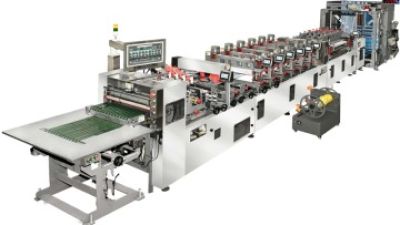
Flexible packaging continues to attract manufacturers seeking lightweight, efficient, and adaptable solutions for food, household, and general consumer products. Three-side-seal pouches and bags are especially suitable for applications that require reliable sealing, neat appearance, and convenient filling. As production requirements become more demanding, converters increasingly need equipment that can deliver stable quality, fast changeovers, precise registration, and reduced material waste. The DZF-600-800III three-side-seal bag making machine is designed to meet these needs through advanced electronic shaft technology and fully automatic process coordination.

Instead of relying on traditional mechanical shafts, gears, and connecting rods, the machine uses independent servo motors at each working station. A PLC system electronically synchronizes film unwinding, tension control, color-mark tracking, side sealing, cross sealing, slitting, and finished-bag collection. This configuration supports accurate movement control and consistent sealing performance during continuous operation. Designed for high-quality standard three-side-sealed composite bags, the equipment can help packaging factories improve productivity while maintaining dependable dimensions and appearance. Its flexible operating structure also makes it suitable for varied film materials and changing production schedules, providing a practical foundation for modern flexible packaging manufacturing.

FAQS

Why can a machine rated at 60 bags per minute produce fewer bags?

Speed changes with bag size, film thickness, seal design, and material tension. Small bags may reach 60 bags per minute. Larger bags often run slower. Real output matters more than the headline rating.

How should actual production speed be tested?

Use your own film, bag dimensions, and sealing temperature. Run the machine long enough to expose heat buildup and operator fatigue. Count accepted bags, not only machine cycles. Short demonstrations can look impressive.

Which production problems should be recorded during testing?

Record film alignment stops, cutting adjustments, roll changes, and changeover time. Also measure rejected bags, waste, and machine uptime. A simple log beside the machine helps. Do not trust memory alone.

Can the fastest setting reduce product quality?

Yes. Higher speed may weaken seals or reduce dimensional accuracy. A slower setting can produce more saleable bags. Check seal strength at 20, 40, and 60 bags per minute. Fast is not always better.

What documents should be checked before purchase?

Request conformity documents, risk assessments, electrical drawings, and guarding details. Check fixed covers, interlocked doors, emergency stops, and protected sealing areas. Documents should match the actual machine. Paperwork alone proves little.

What warranty details deserve careful attention?

Check the coverage period, response time, travel costs, and exclusions. Ask specifically about heaters, blades, sensors, and control components. A missing sensor can stop production. Small exclusions may become expensive.

How can spare-parts support affect production?

Request a recommended parts list, prices, and delivery estimates. Confirm that common sensors, blades, and heaters remain available for several years. Keep critical parts nearby. Waiting can cost more than storage.

What should operator training include?

Training should cover setup, temperature control, film alignment, cleaning, and fault isolation. Safe shutdown procedures also need practical demonstration. Record attendance and training results. Automation still needs skilled operators.

Should one operator be able to control the machine?

Ideally, one trained operator should manage normal production without constant intervention. Test roll changes, adjustments, and minor faults during the trial. Watch for repeated manual corrections. I once trusted a high rating and missed changeover delays.

Conclusion

Choosing the right Synthetic Bag Making Machine begins with clearly defining your production needs. Identify whether you will process 40–120 GSM nonwoven fabric or 0.05–0.20 mm film, then select a machine that matches your preferred assembly method, including heat sealing, sewing, cutting, or ultrasonic bonding. Compare rated output carefully, but focus on realistic performance of 20–60 bags per minute under normal operating conditions rather than advertised speed alone.

A reliable machine should handle different material thicknesses, GSM levels, coatings, and handle designs while maintaining cutting accuracy close to ±1 mm. Programmable bag-length control can further improve consistency and reduce waste. Before purchasing, calculate energy consumption, compressed-air requirements, and maintenance costs per 1,000 bags. Finally, confirm essential safety and support features, such as CE and ISO 9001 documentation, effective guarding, warranty coverage, spare-parts availability, and practical operator training. These checks help ensure stable production, predictable operating costs, and long-term value.

Aurora

Aurora

Aurora is a dedicated marketing professional with extensive expertise in the field of machinery equipment. With a strong background in research and development, design, production, and sales, Aurora plays a pivotal role in enhancing brand visibility and communicating the company's core offerings.......
Previous How to Choose a Flat Bottom Pouch Machine?