Leave Your Message
0%

Picking out Bag Making Machinery isn’t just about grabbing some equipment — it’s more of a practical decision that requires some thought. The right machine should really fit your materials, bag style, production needs, and quality standards. If you’re running a small workshop, you probably want a compact machine that handles polyethylene or paper bags without fuss. But if you're running a big operation, you'll likely need something with automatic feeding, printing, gusseting, cutting, and handle attachment — all of which can really impact costs, maintenance, floor space, and what kind of training your staff will need.

A good industry tip comes from Dr. Peter Stein of Windmöller & Hölscher — he says, “The best machine isn’t always the fastest, but the one that works reliably for what you actually need.” Honestly, that’s something worth thinking about. When chatting with suppliers, ask for real proof of their machines’ output based on your specific bag size and material thickness. And don’t just watch it run for ten minutes — try to see it in action for a few hours if you can. Pay attention to things like sealing strength, cutting accuracy, noise levels, waste, and how long it takes to switch over to a different bag type. Take a close look at the control panel because your operators will be using it every day.

Little details really matter here. Check whether spare parts are easy to get and how quickly technicians can respond if something goes wrong. A lower upfront price might seem tempting, but it could end up costing you more if, say, a sensor croaks and stops your line. Also, consider energy use — don’t just focus on speed; unstable material feeding can cause all sorts of headaches. I’ve seen machines with impressive specs that, in reality, behave differently depending on the batch of film you’re using. That’s an uncomfortable lesson learned, but an important one. At the end of the day, your reliable bag-making equipment should help keep your production steady, operate safely, and adapt to new products down the line. Take your time comparing suppliers, write down every promise, and leave room for good old human judgment. No machine is perfect. The key is choosing one that’s dependable, serviceable, and a good fit for the direction you're headed with your business.
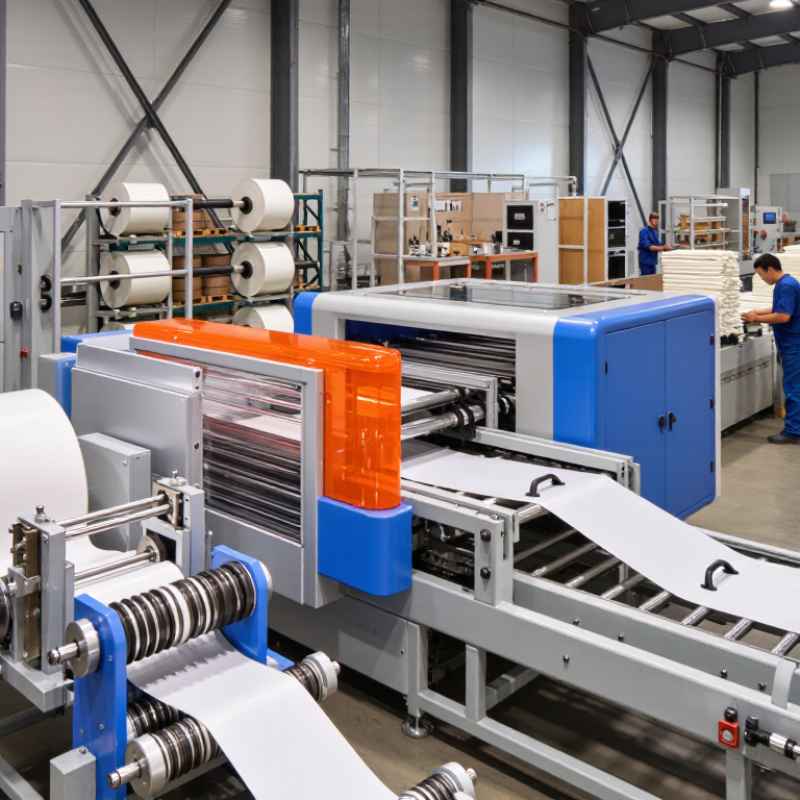
How to Choose Bag Making Machinery for Your Business?

Define Bag Types, Materials, and Output Targets in Bags per Minute

Choosing High Quality Bag Making Machinery starts with defining the exact bag you will produce. A flat shopping bag, woven sack, paper pouch, and valve bag need different forming and sealing systems. Record the bag length, width, gusset depth, handle style, and seal structure. Measure the bag, not only the machine frame.

Material selection directly affects machine performance. Polypropylene fabric may require strong cutting pressure and stable edge control. Paper needs gentle feeding to prevent tearing and dust buildup. Plastic film can stretch during sealing, especially in warm workshops.

During a production trial, check seal strength, edge accuracy, and surface marks. A fast machine is not useful if it creates weak seams.

Set your target in usable bags per minute. Do not rely only on the advertised maximum speed. If a machine runs at 80 bags per minute but produces 62 acceptable bags after adjustments, plan around 62. Include material changes, cleaning, operator breaks, and rejected bags in your calculation.

A simple trial helps: run one hour, count qualified bags, and record every stoppage. I once underestimated handle alignment waste; the hourly output looked good, but the sellable quantity was disappointing. Leave room for learning. Machine controls, maintenance access, and operator training also influence daily production.

Match Machine Capacity to Required GSM, Film Thickness, and Bag Dimensions

Choosing Packaging Bag Machinery starts with material, not advertised bag speed. PlasticsEurope’s Plastics—the Fast Facts 2023 reported 400.3 million tonnes of global plastics production in 2022. That scale hides a practical issue: every film structure behaves differently.

For polyethylene, a 30-micron film weighs approximately 27.6 grams per square metre, using a density near 0.92 g/cm³. GSM rises with thickness, while sealing performance can change sharply.

Convert the order into kilograms per hour. A 500-millimetre layflat tube, an 800-millimetre bag length, and 30-micron film require about 22 grams per bag. At 100 bags per minute, theoretical output reaches roughly 132 kilograms per hour. Real output will be lower. Stopping, trimming, rejects, and seal cooling consume capacity. Small details matter. A wider gusset increases film consumption without changing the bag length.

Smithers’ The Future of Global Flexible Packaging to 2028 identifies downgauging and material efficiency as continuing industry priorities. That makes thickness control important, but thinner is not automatically better. A machine designed for heavy 80-micron film may struggle with lightweight 20-micron film at the same tension setting. Check the usable GSM range, film-width limits, maximum roll diameter, sealing length, and rated output under your actual bag dimensions. I have seen buyers trust bags-per-minute figures too quickly. That shortcut needs more doubt. Request a production trial with your film, not a generic sample.

Compare Cutting, Sewing, Printing, and Sealing Technologies by Process

How to Choose Bag Making Machinery for Your Business?

Choosing bag machinery starts with the production process, not the machine catalog. Cutting equipment should match material thickness, roll width, and required accuracy. A sharp blade may handle woven fabric well, while a heated cutter can reduce edge fraying on synthetic materials. Test real samples. Small differences become costly across thousands of bags.

Sewing machines need consistent feeding, adjustable stitch length, and enough motor strength for layered seams. Check operator comfort, too. Slow threading can quietly reduce daily output. Printing technology depends on surface texture, ink requirements, and image detail. Simple logos may suit flexographic printing, while detailed artwork may need digital equipment. Drying time matters more than many buyers expect.

Sealing equipment must match the bag’s film, opening design, and expected load. Heat settings that work on thin film may weaken thicker material. Ask suppliers for test records, maintenance guidance, and safety documentation. Overload Protection Bag Machinery can help reduce motor damage and improve workplace reliability, especially during continuous operation. However, protection systems cannot replace correct loading or regular inspection. I have seen production plans fail because buyers compared speed only. That assumption was expensive. Measure scrap, changeover time, power use, and repair access before deciding. No machine fits every factory.

Evaluate Automation Using OEE, Cycle Time, and Labor-Hour Requirements

How to Choose Bag Making Machinery for Your Business?

Evaluate Automation Using OEE, Cycle Time, and Labor-Hour Requirements

Choosing bag-making machinery starts with measured demand, not impressive specifications. In a working factory, OEE shows whether equipment creates usable bags during planned production time. It combines availability, performance, and quality. A machine with 90% uptime may still deliver weak results. Scrapped seams and frequent adjustments reduce its real value. Track these losses across several shifts, including changeovers and short stoppages.

Cycle time should be tested with your actual fabric, bag size, handle design, and sealing method. Ask operators to run a representative batch, not a perfect demonstration. Record seconds per finished bag. Separate machine time from loading, inspection, and packing. If one bag takes 12 seconds, 3,000 bags require 10 machine hours before breaks and downtime. That estimate can mislead.

Our first calculation once ignored material loading.

Compare automation through labor hours per 1,000 acceptable bags. Include feeding, trimming, quality checks, maintenance, and rework. A semi-automatic line may cost less but require three operators per shift. A more automated line may reduce direct labor while increasing training needs.

OEE data should be collected after stabilization, not on day one. Review several production runs. No machine performs perfectly. If projected savings depend on zero defects, revise the model. Choose equipment that fits your workflow, skills, volume, and tolerance for downtime.

Verify Safety Compliance with ISO 12100 and Guarding Requirements

When selecting bag-making machinery, safety should be checked before speed, output, or price. ISO 12100 offers a practical method for identifying hazards, estimating risks, and reducing exposure through design. Walk around the proposed line. Inspect nip points near rollers, heated sealing bars, cutters, belts, and film unwinding units. Guards should prevent physical access during operation. A warning label alone is not enough. Keep it observable.

Ask for a documented risk assessment covering normal production, cleaning, setup, maintenance, and foreseeable misuse. Interlocked guards should stop hazardous movement when opened. The system should require a controlled reset before restarting. Test emergency stops from every operator position. Check whether pneumatic pressure, stored heat, and electrical energy remain dangerous after shutdown. Do not guess. Request evidence from practical testing, not only a sales sheet.

For Low Odor Food Safety Bag Machinery, guarding should also support hygienic production. Smooth surfaces reduce trapped residue around sealing and cutting areas. Confirm that food-contact materials, lubricants, and cleaning procedures suit the intended application. During a factory trial, watch an operator load film, clear a jam, and restart the line. Small gaps often appear then. I have seen safety plans overlook awkward hand positions during adjustment. That weakness deserves correction. Verify training records, inspection schedules, and local regulatory requirements before acceptance.

How to Choose Bag Making Machinery for Your Business? - Verify Safety Compliance with ISO 12100 and Guarding Requirements

Selection Dimension What to Check Before Purchase Relevant Safety Reference Recommended Evidence or Test Priority
Risk Assessment Confirm that the machine has a documented risk assessment covering cutting, sealing, punching, feeding, web movement, material handling, cleaning, setup, maintenance, and foreseeable misuse. ISO 12100:2010 Request the machinery risk assessment and check whether hazards are evaluated for normal operation, abnormal conditions, and reasonably foreseeable misuse. High
Inherently Safe Design Prefer designs that reduce hazards through low-risk layouts, controlled movement, limited access to dangerous areas, suitable operating speeds, and reduced stored energy before relying on warnings. ISO 12100:2010 Review the machine layout, access points, operating modes, energy isolation method, and documented risk-reduction decisions. High
Fixed and Movable Guards Check that guards prevent access to cutting blades, nip points, heated sealing elements, rotating shafts, belts, gears, and other hazardous moving parts. Guards should be robust, securely attached, and difficult to bypass. ISO 14120:2015; ISO 12100:2010 Inspect guard strength, attachment points, openings, reach distances, visibility, sharp edges, and access requirements during production and maintenance. High
Interlocked Access Guards Access doors or panels that expose hazardous motion should use suitable interlocking devices. Opening the guard should prevent or stop the hazardous function, and hazardous motion should not restart unexpectedly when the guard is closed. ISO 14119; ISO 13849-1 Perform functional tests with the machine running: open each interlocked guard, verify the hazardous motion stops as intended, and confirm that closing the guard does not cause automatic restart unless specifically designed and risk-assessed. High
Safety-Related Control System Verify that emergency stops, guard switches, light curtains, two-hand controls, and other safety functions are connected to a suitable safety-related control architecture. ISO 13849-1; IEC 62061 Request the safety-function design information, performance-level or safety-integrity calculations where applicable, circuit drawings, component specifications, and validation results. High
Emergency Stop Emergency-stop devices should be readily accessible, clearly identifiable, and designed to stop hazardous movement as quickly as reasonably practicable. Resetting the device must not by itself restart the machine. ISO 13850 Check the location and visibility of every emergency-stop device, test each device during operation, verify manual reset, and confirm that restart requires a separate deliberate command. High
Electrical Safety Evaluate protection against electric shock, short circuits, overcurrent, unexpected energization, incorrect wiring, and loss or restoration of power. IEC 60204-1 Review electrical schematics, protective bonding, enclosure protection, disconnecting means, control-circuit protection, labeling, and electrical test records. High
Energy Isolation The machine should provide practical means to isolate electrical, pneumatic, hydraulic, thermal, and mechanical energy before cleaning, adjustment, jam clearing, or maintenance. ISO 12100; applicable local regulations Identify all energy sources, test the main isolator and lockout points, check residual-energy dissipation, and confirm that maintenance instructions describe isolation steps. High
Operating Modes Setup, threading, inspection, manual jog, automatic production, and maintenance modes should be clearly defined. Reduced-speed or hold-to-run controls may be required for tasks involving temporary access to hazardous areas. ISO 12100; ISO 13849-1 Test each operating mode, selector switch, enabling device, jog control, and mode-transition behavior. Confirm that the selected mode cannot unintentionally activate another mode. High
Presence-Sensing Devices Where physical guards are impractical, assess whether light curtains, safety scanners, pressure-sensitive devices, or similar protective equipment is appropriate for the hazard and stopping distance. ISO 13855; IEC 61496 Measure or obtain the total stopping time, verify the safety distance, test detection across the protected opening, and check muting or blanking functions for misuse risks. High
Noise, Heat, and Ergonomics Consider noise from drives and cutting systems, heat from sealing units, manual loading posture, repetitive handling, access height, vibration, and material-roll weight. ISO 12100; applicable occupational safety regulations Request measured noise data where available, inspect thermal shielding and warning labels, assess operator reach zones, and conduct a representative ergonomic trial with the intended materials. Medium
Safety Signs and Instructions Hazard labels, direction-of-motion markings, residual-risk warnings, operating instructions, cleaning procedures, and maintenance instructions should be clear and provided in the users’ working language. ISO 12100; ISO 3864 series Review the instruction manual, safety labels, troubleshooting procedures, required personal protective equipment, and training materials before acceptance. Medium
Guarding Validation Safety measures should be validated after installation and after changes to tooling, software, guarding, production speed, or material format. ISO 12100; ISO 13849-2 Create a commissioning checklist covering guard inspections, safety-device tests, stopping performance, restart prevention, fault behavior, and documented corrective actions. High
Production Capability Compare bag type, material, film thickness, bag dimensions, sealing method, cutting accuracy, changeover time, line speed, and reject rate without compromising safety functions. Business specification and ISO 12100 risk principles Run a witnessed acceptance test using representative materials and formats. Record output, quality, changeover steps, operator access, and safety-device performance. Standard
Documentation and Legal Compliance Confirm that the supplier provides the required technical documentation, declarations, drawings, spare-part information, maintenance schedules, and applicable conformity records for the destination market. Applicable local machinery and workplace-safety legislation Have a qualified person or competent authority review the documentation against the installation country’s legal requirements. ISO 12100 alone does not establish compliance with every jurisdiction. High

Selection principle: Choose machinery only after reviewing both production performance and the complete risk-reduction strategy. Safety devices, guarding, controls, installation, commissioning, operator training, and maintenance must work together throughout the machine’s lifecycle.

Calculate Total Cost Through Energy Use, Maintenance, and Payback Period

Choosing bag making machinery requires more than comparing purchase prices. Calculate the total cost over several operating years. Include electricity, routine maintenance, spare parts, labor, and expected downtime. A machine using 8 kWh per hour can consume significant funds during two daily shifts. Multiply its energy use by local electricity rates and annual working hours. Use measured data when possible, not only catalog estimates.

Tips: Request energy readings during normal production. Ask for maintenance intervals, replacement part prices, and service response times. Build a simple spreadsheet with optimistic and conservative scenarios. The cheaper option may have higher long-term costs. That happens often.

Estimate the payback period by dividing the extra investment by annual savings. A more efficient machine costing $12,000 more may save $4,000 yearly, creating a three-year payback. However, this calculation can be imperfect. Production speed, material changes, idle periods, and operator training may alter the result. Record actual output during a trial period, including short stops and cleaning time. Reliable decisions come from comparing similar workloads, not impressive maximum-speed figures. Consider maintenance access too. A ten-minute adjustment can become an expensive delay when tools or technicians are unavailable.

FAQS

What should I define before choosing bag-making machinery?

Define the bag length, width, gusset depth, handle style, and seal structure. A flat bag needs different forming equipment than a woven sack. Measure the finished bag, not only the machine frame.

How does material affect machine performance?

Polypropylene fabric may need strong cutting pressure and stable edge control. Paper requires gentle feeding to reduce tearing and dust. Plastic film can stretch during warm sealing. Test real material samples.

How should I calculate usable bags per minute?

Do not plan from the advertised maximum speed alone. Run the machine for one hour and count qualified bags. Record cleaning, material changes, breaks, stoppages, and rejects. Not always.

Why can theoretical output differ from sellable output?

A machine may produce 80 bags per minute but deliver only 62 acceptable bags. Handle alignment, weak seals, trimming, and cooling can reduce usable output. I once underestimated handle waste. The hourly result looked better than the saleable quantity.

How do film thickness and GSM influence capacity?

Thicker film usually increases GSM and material consumption. For example, 30-micron polyethylene film weighs about 27.6 grams per square metre. A 500-millimetre tube and 800-millimetre bag length may use about 22 grams per bag. Thickness changes sealing behavior, too.

Should I always choose thinner film for efficiency?

No. Thinner film may reduce material use but demand better tension control. A machine designed for heavy film may struggle with lightweight film. Check the usable GSM range and film-width limits. Thinner is not automatically better.

What production details should I verify during a machine trial?

Use your actual film, fabric, or paper instead of generic samples. Check seal strength, edge accuracy, surface marks, and cutting quality. Record roll diameter, changeover time, power use, and rejects. Test it.

How should I compare cutting, sewing, printing, and sealing systems?

Match cutting tools with material thickness, roll width, and edge requirements. Sewing systems need steady feeding, adjustable stitches, and enough motor strength. Printing depends on surface texture, artwork detail, ink, and drying time. Sealing settings must suit the film and expected load.

What operational features matter beyond production speed?

Check control simplicity, maintenance access, operator comfort, and training needs. Slow threading can quietly reduce daily output. Overload protection may reduce motor damage, but it cannot replace inspection. That matters.

Conclusion

Choosing the right Bag Making Machinery begins with a clear understanding of your product requirements and production goals. Define the bag types, materials, dimensions, and target output in bags per minute before comparing equipment. The machine must match the required GSM, film thickness, and bag size to ensure stable quality and efficient operation. Consider how cutting, sewing, printing, and sealing technologies fit into your specific production process, including their precision, flexibility, and maintenance needs.

Automation should be evaluated through OEE, cycle time, and labor-hour requirements rather than appearance alone. A reliable system should also meet ISO 12100 principles and include suitable guarding to support safe operation. Finally, assess the total cost of ownership by reviewing energy consumption, routine maintenance, spare parts, and the expected payback period. A balanced decision will help improve productivity, control operating costs, and support long-term business growth.
Clara

Clara

Clara is a dedicated marketing professional at a high-tech enterprise based in Shantou City, Guangdong Province. With a strong background in research and development, design, production, and sales, she possesses an in-depth understanding of the company's innovative machinery solutions. Since......
Previous Top 10 Hand Bag Making Machine Manufacturers Worldwide