Leave Your Message
0%

When you're choosing pouch equipment in 2026, it's not just about comparing machine prices. That decision touches sealing strength, production speed, waste, labor, and the formats you might want to run later. A pouch line can look super efficient during a factory demo, then behave very differently once dusty powders, oily snacks, or recycled film hit it.

Grand View Research valued the global flexible packaging market at roughly USD 289 billion in 2023, and its report expects growth to continue through 2030. Smithers also flags sustainability, lightweight structures, and recyclable mono-material films as major market forces. All of that puts extra pressure on pouch manufacturers. The equipment has to handle thinner films without unstable tension or leaky seals.

“Automation is not a destination, but rather a journey,” says Jorge Izquierdo, Vice President of Market Development at PMMI. That point really matters when you're picking pouch equipment. A system with remote diagnostics, recipe management, and scalable automation may give you more value than a cheaper machine with limited controls.

Look closely at the details. Can operators change a format without too much downtime? Does the sealing station keep a consistent temperature across long shifts? And can the supplier provide documented test results using your actual film and product?

Small details matter.

Still, no equipment choice is perfect. Energy data may be incomplete, and quoted output often assumes ideal conditions. Buyers should push back on optimistic figures, ask for factory acceptance testing, and talk with existing users. Reliable decisions come from supplier evidence, operator experience, and independent reports. The strongest 2026 investment won't simply run faster. It will stay adaptable when materials, regulations, and customer expectations change.
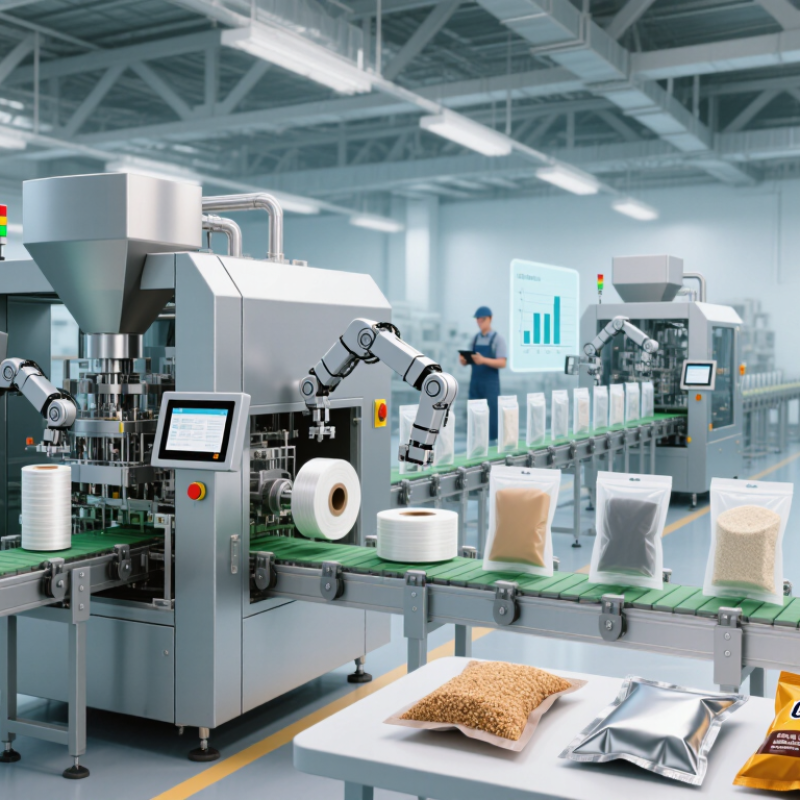
How to Choose Pouch Equipment in 2026?

Define 2026 Pouch Formats, Materials, and Target Pack Sizes

How to Choose Pouch Equipment in 2026?

Pouch equipment should follow the pouch format, material structure, and target fill weight. Stand-up pouches need reliable bottom forming and zipper alignment. Flat pouches require accurate web tension and clean heat sealing. Spouted and retort formats demand stronger sealing control. A 100-gram snack pouch runs differently from a 2-kilogram refill bag.

Material choice changes the machine specification. Mono-PE and mono-PP structures may support recycling goals, but they can have narrower sealing windows. Laminated PET/PE structures usually offer stable stiffness and barrier performance. Retort pouches need heat-resistant films, validated seals, and controlled cooling. The Flexible Packaging Association reported that the United States flexible packaging market reached about 39.7 billion dollars in 2022. Smithers also expects continued global growth through 2028. These figures show demand, not automatic equipment suitability.

Tips: Test the exact film before purchase. Measure seal strength, leakage, oxygen transmission, and changeover time. Ask for trials at your smallest and largest pack sizes. A machine that performs well at 500 grams may struggle at 50 grams. Do not trust a sample run alone. In my experience, purchasing teams often overlook future format changes. That can make a fast machine expensive to modify. Confirm recipe range, pouch dimensions, filling accuracy, dust control, and operator access. Reflect honestly: the cheapest line may create the highest cost per usable pouch.

How to Choose Pouch Equipment in 2026? - Define 2026 Pouch Formats, Materials, and Target Pack Sizes

A practical comparison of pouch structures, target fill sizes, barrier requirements, and suitable equipment configurations.

Typical commercial ranges are shown for equipment selection. Actual specifications depend on product density, viscosity, sealant, pouch dimensions, filling accuracy, and applicable food-contact or product-safety requirements.
Pouch format Typical material structure Barrier and product suitability Typical target pack size Recommended equipment type Common filling system Key selection points
Three-side-seal sachet PET/PE, OPP/PE, or PET/foil/PE for higher barrier applications Suitable for powders, granules, sauces, condiments, and single-use products; foil laminates provide stronger light, oxygen, and moisture protection. 1–50 g or ml Multi-lane stick-pack or sachet machine Auger, cup, liquid piston, or pump filler Prioritize lane count, dosing accuracy, tear-notch performance, seal contamination tolerance, and roll-film registration.
Stick pack PET/PE, OPP/PE, paper/PE, or foil laminate Efficient for narrow, elongated single portions such as drink powders, sugar, instant coffee, and nutraceuticals. 1–30 g or ml Multi-lane stick-pack machine Auger, volumetric cup, or servo-driven liquid pump Check powder flowability, dust control, seal width, cutting accuracy, and the available number of lanes.
Quad-seal or block-bottom pouch PET/PE, OPP/PE, PET/metalized film/PE, or recyclable PE-based laminate Good shelf presentation and stability for coffee, pet food, snacks, grains, and dry ingredients; barrier level should match oxygen, moisture, aroma, and light sensitivity. 250 g–2 kg Form-fill-seal machine with gusseting and four-corner sealing capability Multihead weigher, linear weigher, or auger filler Confirm gusset geometry, bag stiffness, dust extraction, weighment speed, and the required top-seal or zipper design.
Flat-bottom pouch PET/PE, PET/foil/PE, or PE-based recyclable laminate Designed for a premium shelf appearance, stable base, and relatively large dry-food or pet-food packs. 500 g–5 kg Dedicated flat-bottom bagger or premade-pouch packaging line Multihead weigher, linear weigher, or auger filler Evaluate bag opening, bottom forming, zipper insertion, dust management, and the space required for larger packs.
Stand-up pouch with zipper PET/PE, PET/CPP, OPP/CPP, or high-barrier laminate with PE or CPP sealant Suitable for snacks, confectionery, dried fruit, powders, pet treats, and household products requiring resealability. 50 g–1 kg Premade-pouch filler and sealer; roll-stock machine with zipper insertion for high-volume production Multihead weigher, linear weigher, auger, or cup filler Specify zipper type, pouch-mouth tolerance, opening performance, product settling, and nitrogen-flushing capability if required.
Spouted pouch PET/PE, PET/CPP, or foil laminate with a PE/PP-compatible sealant Used for sauces, beverages, purees, detergents, personal-care liquids, and other pourable products. 80 ml–1.5 L Premade-spouted-pouch machine or spout-insertion form-fill-seal system Piston, servo pump, mass-flow, or magnetic-flow filling system Match pump design to viscosity and particulates; verify spout welding, cap torque, drip control, and clean-fill performance.
Retort pouch PET/Al foil/CPP or high-barrier polyester/CPP structures rated for retort processing For commercially sterilized ready meals, sauces, seafood, meat, and shelf-stable foods; laminate and sealant must withstand heat and pressure. 100 g–2 kg Retort-rated premade-pouch filling and sealing line Volumetric, piston, net-weigh, or particulate-capable filler Validate seal integrity after thermal processing, headspace control, pouch handling, sterilization cycle, and cooling requirements.
Vacuum pouch PA/PE or multilayer polyethylene-based vacuum film Common for meat, cheese, seafood, and products where oxygen reduction and close product contact are important. 250 g–5 kg Chamber vacuum sealer or automatic vacuum packaging machine Manual loading, piston filler, or portioning system Select vacuum level, chamber size, seal-bar configuration, film puncture resistance, and liquid-management capability.
Recyclable mono-material pouch PE-based or PP-based multilayer film with compatible printing, coating, and sealant layers Designed to improve packaging recyclability where local collection and recycling systems accept the selected polymer; barrier performance may differ from foil laminates. 20 g–2 kg VFFS, HFFS, or premade-pouch equipment configured for the selected mono-material film Weigher, auger, cup, piston, or pump filler Test seal-window width, coefficient of friction, stiffness, heat resistance, oxygen and moisture transmission, and recycling-label requirements.
Liquid pillow pouch PE or multilayer PE-based film; higher-barrier laminates for oxygen-sensitive liquids Efficient for milk, beverages, detergents, refills, and other pumpable liquids where a simple low-cost format is acceptable. 100 ml–2 L Liquid form-fill-seal machine Piston, gear, lobe, peristaltic, or servo pump Confirm viscosity range, foaming behavior, fill temperature, drip prevention, seal contamination control, and sanitation access.

Calculate Capacity from Peak Demand and 70–85% Planned Line Speed

How to Choose Pouch Equipment in 2026?

Pouch equipment should match peak demand, not average monthly volume. Start with your highest realistic production week. Include seasonal orders, planned promotions, and expected product changes. Then divide required pouches by available production hours. This gives the required hourly capacity.

Do not run equipment continuously at its rated speed. A practical planning range is 70–85% of the stated line speed. For example, a machine rated at 120 pouches per minute may deliver 84–102 pouches per minute in daily operation. Allow time for film changes, cleaning, sealing adjustments, minor stoppages, and operator checks. My first capacity estimates were too optimistic because I ignored short changeovers. That mistake affected staffing and delivery planning.

Tips: Use peak hourly demand in your calculation. Add a measured loss factor from similar equipment. Test your actual pouch film, filling weight, seal width, and product flow before approval. Small differences matter. Ask for trial data, not only brochure speed. Record rejected pouches during testing. A realistic calculation is:

Required speed = peak hourly demand ÷ effective operating minutes.

If peak demand reaches 38,000 pouches in an eight-hour shift, the machine must produce about 79 pouches per minute before losses. Planning at 80% utilization requires a higher rated speed, close to 99 pouches per minute. Keep a modest reserve for growth, but avoid buying excessive capacity that remains idle. Review the calculation with production, maintenance, and quality teams. Their concerns often reveal costs hidden in the original spreadsheet.

Match Machine Architecture to 4–16 Lanes and 30–150 Packs per Minute

How to Choose Pouch Equipment in 2026? The right answer begins with output, not machine appearance.

4-lane system
at 30 packs per minute

16 lanes
at 150 packs per minute

2,400 pouch cycles
per minute

A 4-lane system at 30 packs per minute suits controlled production and frequent product changes. At the other extreme, 16 lanes at 150 packs per minute can reach 2,400 pouch cycles per minute, depending on indexing and filling design. That difference changes everything: film width, sealing capacity, dosing accuracy, and maintenance access.

PMMI’s 2024 State of the Industry report identifies labor shortages and automation as continuing packaging investment drivers. Smithers’ flexible packaging outlook also projects steady market growth through 2028. These findings support higher automation, but they do not justify buying the largest machine.

A Seed Packing Pouch Equipment line needs stable seed feeding, gentle product handling, and reliable heat sealing. Servo-driven intermittent motion often fits 4–8 lanes with frequent changeovers. Continuous-motion architecture may suit 8–16 lanes and sustained runs, but it demands tighter film control.

Check real output during trials. A machine rated at 150 packs per minute may produce less with lightweight seeds, dust, or irregular pouch shapes. I have seen impressive speed figures collapse during cleaning and film changes. That is the uncomfortable detail.

Compare usable packs per minute, not brochure speed. Leave room for inspection, calibration, and operator mistakes. Even advanced equipment needs them.

Set Filling Tolerances at ±1% and Validate Them with Checkweighers

How to Choose Pouch Equipment in 2026?

Set Filling Tolerances at ±1% and Validate Them with Checkweighers

A reliable pouch line begins with a measurable filling target. Set the acceptable net-weight range at ±1% when the product and machine can support it. For a 500-gram pouch, this means 495 to 505 grams. The target must reflect product density, particle size, moisture, and filling speed. A narrow tolerance looks impressive on paper. It can still create frequent rejects.

In practical trials, run the machine under normal production conditions. Collect samples from different lanes and time periods. Compare each pouch with a calibrated checkweigher, not only the machine display. Record averages, variation, and occasional outliers. Checkweighers should reject underweight packs reliably and identify false rejects during testing. Verify calibration at the start of each shift and after maintenance. Small temperature changes can affect flow. This detail is easy to overlook.

Tips: Use a stable test sample. Check at least ten consecutive pouches, then repeat later. Inspect the seal before weighing. A damaged seal can change the result. Keep operators involved, because real observations often reveal problems that software misses. I have seen teams tighten settings too quickly and lose usable product. A controlled adjustment is safer than chasing every single reading. Revisit the ±1% target when materials change.

Compare Seal Performance Against ISO 11607 and ASTM F88 Test Data

How to Choose Pouch Equipment in 2026?

Compare Seal Performance Against ISO 11607 and ASTM F88 Test Data

Choosing pouch equipment in 2026 requires more than comparing machine speed. The seal must survive handling, sterilization, distribution, and opening by the user. Iso Packaging Pouch Equipment should support controlled temperature, pressure, dwell time, and repeatable material feeding.

In a trial, I watch the seal bar close, then inspect wrinkles near the corner. Small wrinkles matter. They can signal uneven pressure or poor alignment.

ASTM F88 testing measures seal strength and helps compare peel behavior across pouch samples. Record force values, failure modes, jaw settings, film lot, and conditioning time. Do not rely on one attractive average. A high mean can hide scattered low readings.

Compare the data with your validated process range, not an invented universal pass mark. ISO 11607 does not provide one seal-strength number for every pouch design. It expects documented validation and evidence that the package remains fit for use. Some equipment looks precise but lacks stable feedback or traceable records. That is a costly gap. I would request raw ASTM F88 data, repeatability results, and calibration evidence. Then run your own samples. Real materials often behave differently.

Rank Equipment by OEE, Changeover Time, and Three-Year Cost per Pack

Choosing pouch equipment in 2026 requires more than comparing purchase prices. Rank each machine by OEE, changeover time, and three-year cost per pack. These measures reveal how equipment performs during ordinary production, not only during demonstrations.

Start with OEE from verified shift records. Track availability, speed, and quality separately. A machine running at 92% availability may still waste material through sealing defects. Record rejected pouches, short stops, film changes, and cleaning delays. Lab Test Pouch Making Equipment can support trials, but factory data remains more reliable. Small details matter.

Measure changeovers with a stopwatch. Include film replacement, format adjustment, sanitation, inspection, and restart waste. A fast changeover is valuable when orders are short or varied. Then calculate three-year cost per pack. Include equipment payments, labor, energy, spare parts, service, rejected material, and planned downtime. Use realistic production volumes, not optimistic forecasts. The first estimate may be wrong. Recheck it after three months of operation. A lower-priced machine can become expensive when one technician spends forty minutes correcting alignment. Conversely, premium automation may not pay back on a low-volume line. Keep assumptions visible. That makes the decision easier to challenge.

Verify Supplier Support, Spare Parts, and 24-Month Return-on-Investment Targets

How to Choose Pouch Equipment in 2026?

Choosing pouch equipment should begin with support, not machine speed. A fast line can still become expensive when technical help arrives late. Ask suppliers for response times, remote troubleshooting, installation guidance, and operator training. Request service records from similar installations, not only polished sales claims. For Juice Stand Up Spout Pouch Equipment, confirm filling accuracy, sealing stability, and changeover procedures with real product samples. Watch the machine run. Short demonstrations can reveal uneven seals, awkward cleaning points, or confusing controls.

Spare parts deserve equal attention. Ask for a recommended two-year inventory, current prices, and average delivery times. Critical items may include sensors, heaters, sealing jaws, valves, and control components. Check whether technicians can identify faults without replacing everything. That detail matters. Calculate the 24-month return-on-investment target using output, labor, waste, maintenance, utilities, and financing costs. Use conservative production estimates. A supplier promising payback in six months may be ignoring seasonal downtime. I have seen spreadsheets look perfect until rejected pouches and delayed parts appear.

Tips: Put every support promise in the contract. Define response hours, training days, spare-part availability, and escalation contacts. Ask for a written 24-month ROI model with adjustable assumptions. Test three changeovers, not one. Leave room for doubt; your first forecast may be wrong. Recheck it after pilot production. A reliable supplier should welcome those questions, even when they slow the purchase decision.

How to Choose Pouch Equipment in 2026?

Verify supplier support, spare parts, and 24-month return-on-investment targets before purchasing.

The chart compares practical procurement thresholds for pouch equipment. Support response compliance means qualified technical responses delivered within the agreed SLA; critical spare-parts availability measures the percentage of essential parts that can be supplied within the required lead time; uptime is based on scheduled production hours; and 24-month ROI is calculated as (cumulative 24-month savings − installed investment) ÷ installed investment × 100%. Use these thresholds during supplier audits and validate them with documented service records, parts lists, and a total-cost-of-ownership model.

FAQS

Should pouch equipment be sized for average or peak demand?

Size it for the highest realistic production week. Include seasonal orders, promotions, and planned product changes. Average volume can mislead.

How can I calculate the required production speed?

Divide peak pouch demand by effective operating minutes. For 38,000 pouches in eight hours, production needs about 79 pouches per minute before losses.

Should equipment run at its stated maximum speed?

No. Plan for 70–85% of the rated speed. A 120-pouch-per-minute machine may deliver 84–102 pouches daily.

What causes the gap between rated and practical speed?

Film changes, cleaning, sealing adjustments, minor stoppages, and operator checks reduce output. These minutes add up quickly.

How can I avoid unrealistic capacity estimates?

Add a measured loss factor from similar equipment. Test the actual film, filling weight, seal width, and product flow. Ask for trial data.

Should I buy extra capacity for future growth?

Keep a modest reserve, but avoid excessive capacity. An oversized line may remain idle while adding unnecessary cost.

What filling tolerance is suitable for a 500-gram pouch?

A ±1% tolerance means 495 to 505 grams. The product’s density, moisture, particle size, and speed may require adjustment.

How should filling accuracy be validated?

Use a calibrated checkweigher, not only the machine display. Test samples from different lanes and production periods.

How often should a checkweigher be checked?

Verify calibration at every shift start and after maintenance. Small temperature changes can affect product flow.

What mistakes should teams avoid during filling trials?

Do not chase every reading with rapid adjustments. I once tightened settings too quickly and lost usable product. Controlled changes are safer.

Conclusion

Choosing the right Pouch Equipment in 2026 begins with clearly defining the pouch formats, materials, and target pack sizes your operation will handle. Capacity should be calculated from peak demand while planning to run at approximately 70–85% of the line’s maximum speed, leaving room for maintenance, variation, and future growth. The machine architecture should also match the required production range, including 4–16 lanes and output levels of roughly 30–150 packs per minute.

A reliable evaluation should include filling accuracy, with a target tolerance of ±1% confirmed through checkweighers, as well as seal performance supported by ISO 11607 and ASTM F88 test data. Beyond initial price, compare systems by OEE, changeover duration, and three-year cost per pack. Finally, assess supplier responsiveness, spare-parts availability, training, and technical support. A well-planned purchase should support measurable productivity improvements and align with a realistic 24-month return-on-investment target.
Aurora

Aurora

Aurora is a dedicated marketing professional with extensive expertise in the field of machinery equipment. With a strong background in research and development, design, production, and sales, Aurora plays a pivotal role in enhancing brand visibility and communicating the company's core offerings.......
Previous 7 Tips for Choosing a Synthetic Bag Making Machine