Leave Your Message
0%

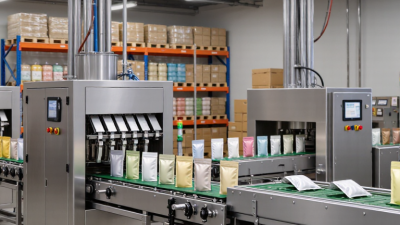
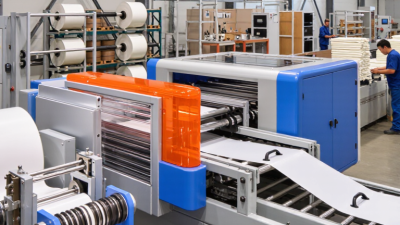
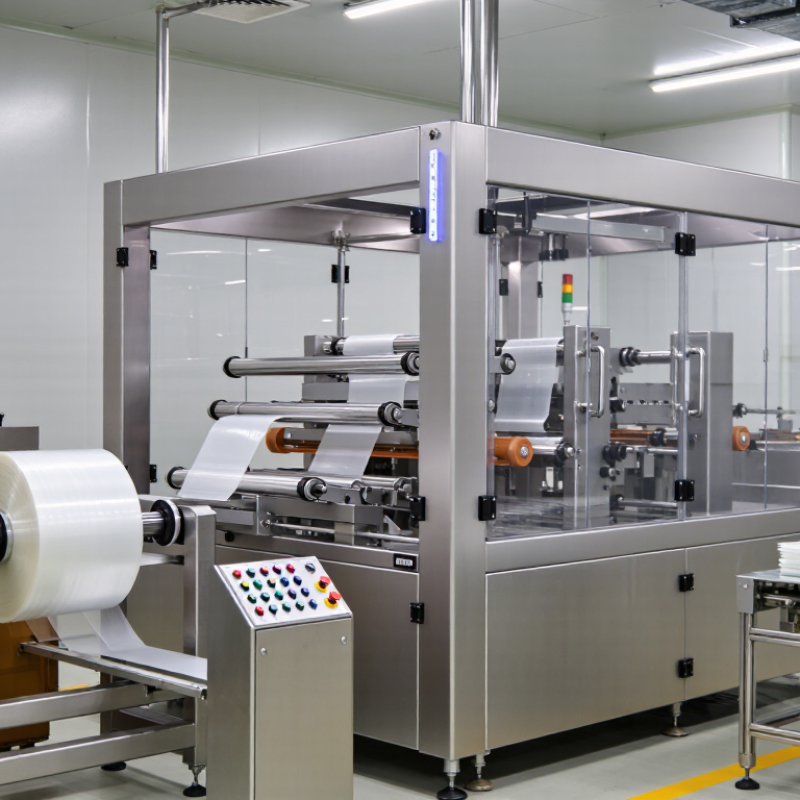
For global packaging buyers, choosing the right converting equipment affects production, quality, and long-term costs. A Flat Bag Making Machine can transform plastic film into consistent bags for retail, food, medical, and industrial applications. Its value appears on the factory floor. Operators adjust bag length, width, sealing temperature, and counting settings with clear controls. Stable feeding helps reduce wrinkles and uneven seals during extended production runs. Short changeover times can also support different order sizes.

But speed alone is not enough. That assumption deserves scrutiny. Buyers should examine seal strength, film compatibility, output stability, and operator safety. A machine may perform well during a short demonstration, yet behave differently after several continuous shifts. Practical testing matters. Request sample production using the actual film, thickness, and bag dimensions planned for regular use. Small details often reveal large operating risks.

Experienced procurement teams also review supplier support before signing an order. Reliable manufacturers should provide technical drawings, operating manuals, maintenance schedules, spare-parts guidance, and training options. They should explain electrical requirements for the destination market. Transparent service terms build confidence across borders. Energy use, material waste, installation space, and cleaning access deserve equal attention. No machine is perfect. However, a well-evaluated Flat Bag Making Machine can offer dependable production and flexible output when its specifications match real factory conditions. The final decision should combine measured trial results, verified documentation, and realistic expectations.
Why Choose a Flat Bag Making Machine for Global Buyers?

Flat Bag Machine Basics: Output Rates of 100–300 Bags per Minute

Why Choose a Flat Bag Making Machine for Global Buyers?

Flat Bag Machine Basics: Output Rates of 100–300 Bags per Minute

A flat bag machine can produce approximately 100–300 bags per minute, depending on bag size, material, sealing pattern, and machine settings. A Flat Bottom Pouch Making Machine may run slower when forming wider gussets or heavier films. In practical production, operators should measure stable output, not only the highest displayed speed. Film tension, temperature control, and cutting accuracy directly affect performance. Small errors can create many rejected bags.

Tips: Test your actual film before purchase. Request a timed production trial with your target bag dimensions. Check seal strength, edge alignment, noise, and material waste. Keep spare heating parts and cutting blades available. They matter during long shifts.

Global buyers also need reliable documentation, operator training, and clear maintenance guidance. A machine reaching 300 bags per minute may require skilled adjustment and consistent raw materials. Lower speed can sometimes deliver better quality and fewer stoppages. This balance is easy to underestimate. I have found that real output often falls below showroom figures, especially during product changes. That is not necessarily a machine failure, but it deserves honest planning. Ask for hourly production records, energy data, and inspection procedures. Confirm that the equipment supports applicable packaging and workplace safety requirements in your market.

Material Range: Processing 10–100 μm PE Film and Recyclable Options

For global buyers, a Roll Flat Plastic Bag Machine must handle more than one routine film grade. Its real value appears when production shifts from light 10–100 μm PE film to stronger structures. This range supports produce liners, garment bags, retail packaging, and industrial inner bags. Thin film needs steady tension control. A small fluctuation can create wrinkles, weak seals, or uneven edges. Thicker film demands stable heating and sufficient pulling force. Operators notice this quickly.

Recyclable options add another layer of engineering. Recycled PE may vary in melt flow, moisture, and contamination. A reliable machine should offer adjustable temperature, speed, and film tension. Simple controls help operators correct changes without stopping the entire line. Trial runs matter. Test the actual film roll, not only a supplier sample. Measure thickness across the web, inspect seal strength, and record startup waste. The numbers tell a clearer story.

There is no perfect setting. We have seen a 20 μm film run smoothly in the morning and wrinkle after material temperature changed. That experience encourages realistic specifications. Buyers should request sample production, maintenance guidance, and documented output at selected thicknesses. Recyclable film may need slower speeds or wider process windows. This can reduce hourly output. Stable quality often matters more than a faster display number. Check local packaging requirements before final configuration.

Production Accuracy: Typical ±1 mm Cutting and Sealing Tolerances

Why Choose a Flat Bag Making Machine for Global Buyers?

Production accuracy often decides whether a flat bag line performs reliably. A typical ±1 mm cutting and sealing tolerance helps maintain consistent bag dimensions during continuous production. It also reduces material waste around the seal area. In factory trials, operators should measure bag width, length, and seal position at regular intervals. Temperature, film tension, and roller pressure can shift results. A perfect number on a specification sheet is not enough.

ISO 11607-1:2019 emphasizes controlled packaging processes and validated sealing performance for relevant applications. ASTM F88/F88M provides a recognized method for measuring seal strength. These standards do not guarantee ±1 mm accuracy, but they support disciplined verification. Smithers’ flexible packaging market analysis also identifies lightweight films and efficient converting as continuing industry priorities. That makes precise equipment valuable for global buyers managing material costs.

Disposable Open Flat Bag Equipment can support repeatable output when technicians calibrate sensors and sealing jaws correctly. Small errors remain possible. Film curl, humidity, and uneven tension may still create defects. Experienced operators record measurements, adjust settings, and inspect samples instead of trusting automation blindly. A 1 mm tolerance should be tested across different film structures and production speeds. One trial is not evidence.

Global Cost Analysis: Comparing Cost per 1,000 Bags and Payback

Global flexible packaging demand continues to expand.
Smithers’ 2024 market study forecasts the sector will exceed US$300 billion by 2028. The Flexible Packaging Association reported approximately US$39.5 billion in United States industry sales for 2022. These figures suggest strong demand, but equipment buyers still need local cost evidence.

Consider a Flat Bottom Pouch Machine producing 120 bags per minute. At 16 operating hours, 22 days monthly, and 80% effective uptime, output reaches about 2.0 million bags. A practical model may estimate film at US$45 per 1,000 bags, labor at US$6, energy and maintenance at US$4, and equipment recovery at US$12. Total conversion cost becomes about US$67 per 1,000 bags, excluding printing and distribution.

A semi-automatic line might add US$55 per 1,000 bags through labor and handling. The saving could reach US$110,000 monthly at full volume. A US$180,000 investment would theoretically pay back in under two months.

That result feels too perfect. Real uptime, changeover time, rejects, and operator training reduce savings. A safer estimate uses 50% utilization, producing a payback near six months.

PMMI automation reports repeatedly identify labor availability and productivity as major investment drivers. Buyers should verify those assumptions with a timed production trial, not only a supplier spreadsheet. Availability matters more than speed.

Format Flexibility: Supporting Multiple Widths, Lengths, and Seal Types

A flat bag making machine gives global buyers practical control over format changes. It can produce different bag widths, lengths, and seal patterns from one production line. This flexibility matters when orders vary by market, product size, or packaging specification.

Experienced operators usually adjust film tracking, temperature, speed, and cutting length together. A wider bag may need steadier tension. A longer bag may require more accurate feed control. Bottom seals, side seals, and other configurations also demand different settings. Small errors can create wrinkles, weak edges, or uneven dimensions. That is why reliable machines should offer clear controls, repeatable adjustments, and accessible maintenance points. Still, flexibility is not magic. Poor calibration can reduce output quality.

Tips: Test each format with sample rolls before full production. Record temperature, speed, tension, and seal pressure. Keep the settings that work. Review them later, because one material may behave differently from another.

For buyers serving multiple regions, format flexibility can reduce equipment changes and simplify training. A machine supporting several width and length combinations can help manage short runs without excessive setup time. However, buyers should check the actual adjustment range, not only the specification sheet. Ask for sample production using the intended film thickness and seal style. A live test often reveals details that brochures miss. Good documentation and responsive technical support also improve long-term reliability.

Market Compliance: Evaluating CE, ISO 9001, and Recycling Requirements

Why Choose a Flat Bag Making Machine for Global Buyers?

Market compliance begins with the machine, not the shipping document. In the European Economic Area, CE marking shows conformity with applicable safety, health, and environmental requirements. It is not a quality certificate. Buyers should request the Declaration of Conformity, risk assessment, electrical schematics, and machine guarding records. Check the details.

ISO 9001 adds process discipline. It requires documented quality controls, traceability, corrective actions, and continual improvement. For a flat bag machine, this can mean recorded sealing temperatures, cutting tolerances, spare-part inspections, and operator training. A supplier may hold certification, yet production results can still vary. Factory acceptance testing remains essential.

Recycling rules require wider thinking. The OECD Global Plastics Outlook reported that only 9% of plastic waste was recycled globally in 2019. Eurostat reported 41.5% plastic packaging recycling in the European Union in 2022. These figures expose the gap between policy and practice. Buyers should evaluate mono-material compatibility, stable sealing, low trim waste, and accurate film control. A machine that handles recyclable structures but creates excessive scrap is not truly efficient. Our assessment may still be incomplete, especially where national packaging rules differ. Request current compliance evidence before approving the purchase.

Why Choose a Flat Bag Making Machine for Global Buyers? - Market Compliance: Evaluating CE, ISO 9001, and Recycling Requirements

Compliance Dimension Requirement or Standard Relevance to a Flat Bag Making Machine Typical Evidence for Buyers Market Timing Buyer Priority
European Union machine safety CE marking under the EU Machinery Directive 2006/42/EC, together with other applicable EU legislation such as the Low Voltage Directive and EMC Directive where applicable. Applies to the machine placed on the EU market. The manufacturer must address foreseeable risks from heated sealing units, cutting blades, rollers, electrical systems, noise, guarding, and emergency stops. EU Declaration of Conformity, technical documentation, risk assessment, user manual, circuit diagrams, test records, safety labels, and a correctly affixed CE mark. The Machinery Directive remains the current primary framework before the EU Machinery Regulation becomes applicable on 20 January 2027. Essential
Future EU machinery transition Regulation (EU) 2023/1230 on machinery products. New purchases or long-term projects should allow for updated requirements covering digital instructions, cybersecurity-related aspects, and machinery safety processes introduced by the Regulation. Updated conformity plan, revised technical file, updated instructions, and confirmation that the machine configuration will remain supportable after the transition date. Applies from 20 January 2027, subject to the Regulation’s transitional provisions. High
Quality management system ISO 9001:2015. ISO 9001 does not certify the machine itself and is not a substitute for CE conformity. It demonstrates that the supplier operates a documented quality management system covering design, purchasing, production, inspection, corrective action, and customer feedback. Valid certificate, certification scope, issuing certification body, certificate validity, production inspection records, calibration records, and nonconformity procedures. Internationally recognized and commonly requested in supplier qualification; certification is voluntary unless required by a contract or regulation. High
EU packaging and packaging waste Directive 94/62/EC remains relevant during the transition, while Regulation (EU) 2025/40 on packaging and packaging waste entered into force on 11 February 2025 and generally applies from 12 August 2026. The regulation generally concerns the bags produced and placed on the EU market rather than the bag-making machine itself. Machine selection should support stable dimensions, controlled material usage, reduced scrap, and documented production data. Material specifications, recycled-content or recyclability information where applicable, production waste records, packaging composition data, and customer or producer-responsibility documentation. New EU packaging rules generally apply from 12 August 2026, with detailed obligations phased according to the Regulation. Essential
Recyclability of finished bags Requirements depend on the destination market, bag format, polymer structure, additives, inks, adhesives, and applicable packaging rules. A machine should be capable of processing the specified recyclable structure with repeatable sealing, cutting, registration, and thickness control. Recyclability cannot be established by the machine alone. Film supplier declaration, material composition, design-for-recycling assessment, seal-strength test, dimensional inspection, and production-trial records. Market-specific; requirements vary by country and may be updated as collection, sorting, and recycling systems develop. High
Extended Producer Responsibility Packaging EPR obligations may require producers or importers to register, report packaging quantities, and finance collection or recycling systems. The machine does not create EPR compliance by itself, but accurate production counters, material records, and scrap tracking can improve packaging-volume reporting. Production records by material and weight, customer allocation data, packaging declarations, and evidence of registration or participation in an approved compliance scheme where required. Country- and region-specific; obligations may apply to manufacturers, importers, brand owners, distributors, or online sellers depending on local law. Medium–High
Electrical and electromagnetic compatibility Applicable electrical safety and EMC requirements depend on the machine’s voltage, control system, installation, and destination market. Correct protection against electric shock, overheating, unexpected start-up, control-system faults, and electromagnetic interference is important for safe continuous operation. Electrical test reports, protective-earth continuity results, insulation or dielectric tests where applicable, EMC assessment, component specifications, and wiring documentation. Confirm before shipment because local voltage, frequency, plug, control-panel, and installation requirements can differ. Essential
Functional performance for recyclable films Performance depends on the approved film specification, including polymer type, thickness range, coefficient of friction, shrinkage, sealing window, and print registration. Adjustable temperature, dwell time, web tension, line speed, edge control, and waste handling help maintain bag quality when using thinner or mono-material films. Factory acceptance test, approved material trial, output sample, seal-strength results, dimensional tolerance report, scrap-rate record, and operating parameter sheet. Required for every project; acceptance criteria should be agreed before production and shipment. High
Evaluation note: CE marking addresses the conformity of the machine, ISO 9001 addresses the supplier’s quality-management system, and recycling or EPR obligations generally address the bags placed on a market. These areas should be evaluated separately and verified against the destination country’s current rules.
Reference framework: EU Machinery Directive 2006/42/EC; Regulation (EU) 2023/1230 on machinery products; ISO 9001:2015; Directive 94/62/EC on packaging and packaging waste; Regulation (EU) 2025/40 on packaging and packaging waste.

Purchase Checklist: Power Needs, Spare Parts, Training, and Service Support

Why Choose a Flat Bag Making Machine for Global Buyers?

Purchase Checklist: Power Needs, Spare Parts, Training, and Service Support

A flat bag making machine should match the buyer’s factory conditions, not only the planned bag size. Check voltage, phase, frequency, installed power, and compressed-air requirements before signing. Check the nameplate first. IEA analysis estimates that electric motor systems consume about 45% of global electricity, so an efficient drive system can influence long-term operating costs. Ask for measured energy data at your expected speed, not only a catalogue estimate. Do not guess.

Spare parts deserve equal attention. Request a recommended two-year list, including heating elements, thermocouples, cutting blades, belts, sensors, fuses, and controller backups. Confirm part numbers and storage conditions. Smithers’ 2024 flexible packaging market assessment valued the global sector at roughly US$300 billion, increasing pressure on converters to reduce downtime and protect output. A low-cost machine can become expensive when one small sensor stops production.

Training should cover setup, temperature control, tension adjustment, fault codes, cleaning, and safe maintenance. Ask whether training is offered remotely and on site. Service agreements should state response times, remote diagnosis, software backup, and commissioning responsibilities. It is easy to treat training as optional. That assumption can become expensive. Not every checklist survives the first busy production week, so leave room for operator feedback and practical revisions.

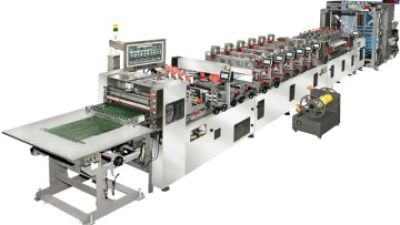
How the DZF-600-800III CCD Electronic Shaft Machine Improves Three-Side Sealing Bag Production

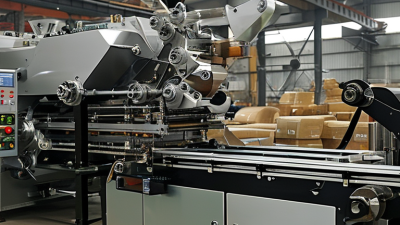
The DZF-600-800III CCD electronic shaft machine is designed to improve the production of three-side sealing pouches and bags through precise, fully automatic operation. Its shaftless electronic drive system replaces conventional mechanical shafts, gears, and connecting rods with independently controlled servo motors. This structure allows each working station to respond quickly and remain accurately synchronized through a PLC control program, helping manufacturers maintain stable quality during continuous production.

The machine integrates film unwinding, tension control, CCD color mark tracking, side sealing, cross sealing, slitting, and finished bag collection in one streamlined process. Accurate color mark detection helps control printing alignment, while independent servo control supports consistent sealing positions and cutting lengths. These functions reduce manual adjustments, minimize material waste, and improve production efficiency when processing composite films for standard three-side sealed packaging.

With its flexible control system and high-precision operating performance, the equipment can adapt to different pouch sizes and production requirements. Smooth electronic coordination also helps reduce mechanical wear and supports reliable long-term operation. For packaging factories seeking cleaner workflows, faster changeovers, and consistent bag quality, the machine provides a practical solution for modern three-side sealing bag production.

FAQS

How many flat bags can a machine produce per minute?

Typical output ranges from 100 to 300 bags per minute. Actual speed depends on bag size, film thickness, sealing design, and machine settings. Stable output matters more than the highest display number. Speed claims need testing.

Why can production run slower than the advertised speed?

Wider gussets and heavier films often require slower forming speeds. Changeovers, temperature adjustments, film tension, and cutting checks also reduce output. Real production may fall below showroom figures. Plan for that.

What should buyers test before purchasing?

Test the exact film and bag dimensions planned for production. Request a timed trial with continuous operation. Check seal strength, edge alignment, noise, waste, and rejected bags. A short test can miss problems.

How much can operating costs vary per 1,000 bags?

A practical example estimates conversion costs near 67 dollars per 1,000 bags. This may include film, labor, energy, maintenance, and equipment recovery. Printing and distribution may cost extra. Local prices change everything.

How should buyers calculate payback time?

Use realistic uptime, changeover time, rejects, training, and labor costs. A high-volume model can suggest payback in under two months. That result may be too optimistic. Using 50% utilization can produce a safer estimate near six months.

What factory conditions must be checked before installation?

Confirm voltage, phase, frequency, installed power, and compressed-air requirements. Measure available space and access routes for delivery and maintenance. Request energy data at the intended operating speed. Do not guess.

Which spare parts should be stored?

Keep heating elements, thermocouples, cutting blades, belts, sensors, fuses, and controller backups. Request a recommended two-year spare-parts list. Confirm part numbers and storage conditions. One small sensor can stop production.

What training should operators receive?

Training should cover setup, temperature control, film tension, fault codes, cleaning, and safe maintenance. Operators should practice correcting misaligned edges and weak seals. Remote training helps, but onsite guidance may reveal more. Practice exposes gaps.

What service support should be included in the agreement?

Confirm response times, remote diagnosis, software backups, and commissioning responsibilities. Ask how replacement parts are identified and shipped. Record maintenance steps near the machine. Plans often change during busy weeks.

Conclusion

A Flat Bag Making Machine offers global buyers a practical balance of speed, precision, and production flexibility. Depending on the configuration, it can produce approximately 100–300 bags per minute while processing PE film from 10–100 μm, including recyclable material options. Typical cutting and sealing accuracy of around ±1 mm helps maintain consistent bag quality, reduce waste, and support reliable high-volume production. Adjustable settings can accommodate different bag widths, lengths, and seal types for varied market requirements.

When evaluating total value, buyers should compare the cost per 1,000 bags, energy consumption, labor needs, and expected payback period rather than focusing only on the purchase price. Compliance should also be reviewed, including CE-related requirements, ISO 9001-based quality systems, and applicable recycling standards. Before purchasing, confirm power specifications, spare-parts availability, operator training, installation assistance, warranty coverage, and long-term technical support to ensure stable operation in the target market.
Aurora

Aurora

Aurora is a dedicated marketing professional with extensive expertise in the field of machinery equipment. With a strong background in research and development, design, production, and sales, Aurora plays a pivotal role in enhancing brand visibility and communicating the company's core offerings.......
Previous How to Choose the Right Pouch Equipment?